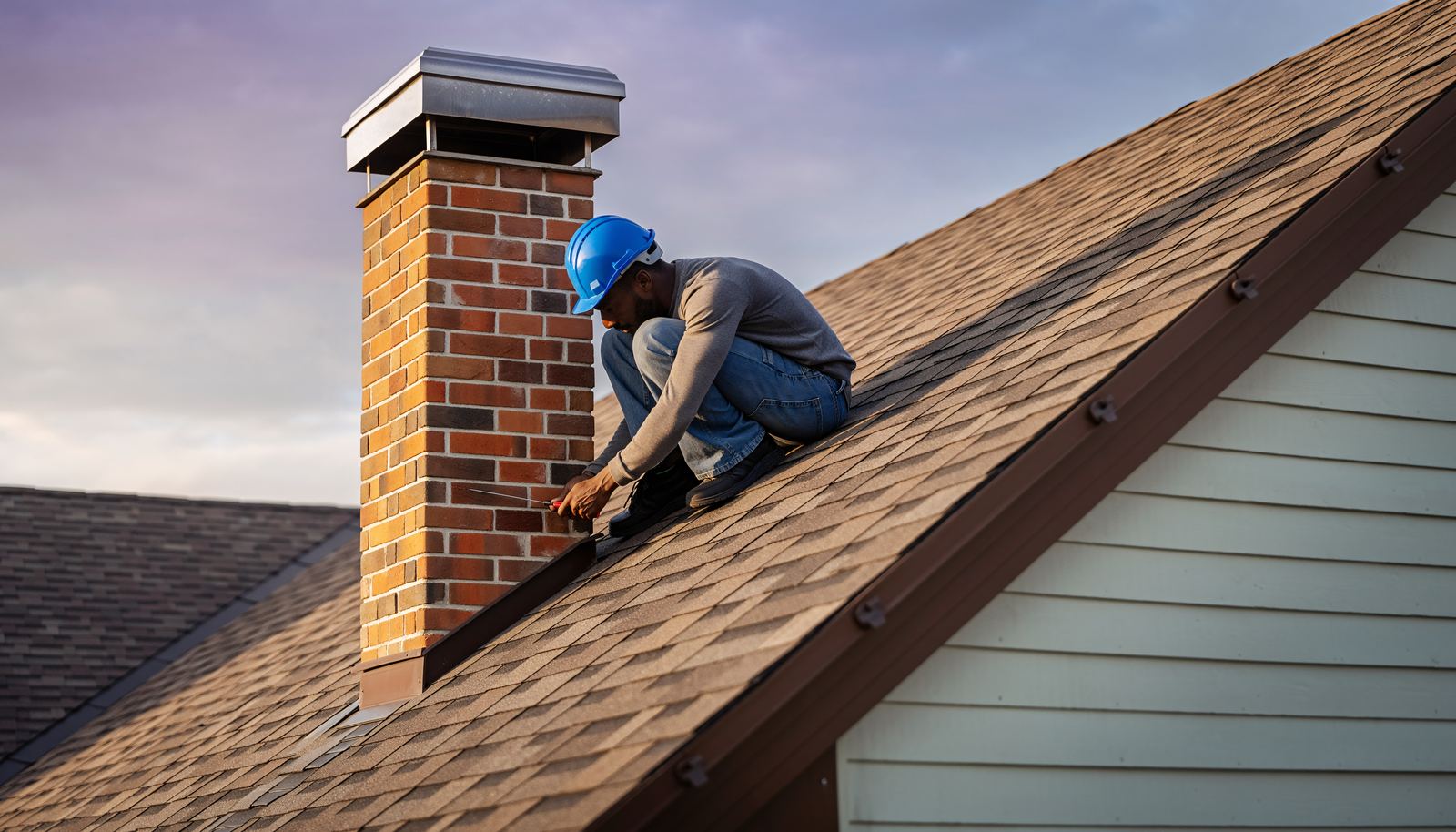
Flashing is the layered metal seal where your chimney meets the roof, and it's one of the most common chimney leak points. Repair ranges from resealing the counter flashing to replacing the whole assembly. One free call to (888) 650-3035 connects you with an independent certified local pro who can fix yours properly.
It helps to know what's up there. Proper flashing is a two-part system: step flashing — L-shaped metal pieces woven into each shingle course along the chimney's sides — and counter flashing, embedded into a groove cut in the mortar joints (called a reglet) and lapped down over the step flashing. The layering does the waterproofing; sealant only dresses the edges. A repair visit starts on the roof with an assessment of that layering. If the metal is sound and correctly installed but the seal where counter flashing meets masonry has dried out, the fix is a reseal: raking out the failed sealant at the reglet, re-securing the metal, and re-sealing the joint. You'll see roof access, hand tools, and not much drama.
Full replacement is more involved. The pro removes the shingles immediately bordering the chimney, strips the old metal, weaves new step flashing into the shingle courses one by one, grinds a clean reglet into the mortar, and bends and sets new counter flashing into it. Material choices — aluminum, galvanized steel, or copper — get discussed up front, balancing longevity against budget priorities and the look of the roof. On wide chimneys on the high side of a slope, the pro may recommend a cricket: a small peaked diverter behind the chimney that sheds water and debris around it instead of letting them pile against the brick. Since none of this is visible from the ground, insist on before-and-after photos as your documentation.
Roofing cement smeared over the entire flashing assembly is the classic short-term fix: it can stop the drip for a season, then cracks as it dries — while gluing the layers together in a way that makes proper repair harder and hides the metal's real condition under black goo. If a chimney arrives at a pro already entombed in tar, replacement is often the only clean path. If someone proposes tar as the repair, understand you're buying time, not a fix.
The shortcut install: instead of grinding a reglet into the mortar joint and embedding the counter flashing, the metal gets surface-mounted flat against the brick and caulked along the top edge. That caulk line faces the weather, fails early, and then channels water directly behind the metal. If you can see a horizontal bead of caulk holding the top of the flashing to flat brick, that's the tell — the durable version sits recessed into the mortar line.
The upsell pattern: 'your flashing is shot' announced by someone who never left the ground, sometimes door-to-door after a storm. Flashing condition is about layering, seals, and hidden metal — none of which is assessable from the lawn. Before approving replacement, ask for close-up photos of your actual chimney with recognizable landmarks (your shingle color, your brick) showing the specific failure. A pro with a real finding will have taken those photos already.
These are call-a-professional signs, not panic signs. Stop using the fireplace until it's been looked at, and describe what you're seeing when you call.
It sits exactly on the boundary, which is why it gets botched — roofers may hesitate to cut into masonry, and the mortar-embedded counter flashing is masonry work. The honest answer: either trade can do it well if they handle the complete two-part system, step flashing woven into the shingles and counter flashing set into a ground reglet. Chimney pros bring the advantage of evaluating the crown, cap, and masonry in the same visit.
Usually yes, and it's the cheapest moment to do it — the shingles around the chimney are already off, so the added effort is minimal. Reusing old flashing under a new roof pairs fresh shingles with the component most likely to fail first, and chasing a flashing leak later means disturbing the new roof. If your roofer proposes reusing it, ask them to photograph its condition and justify the call in writing.
It matters for lifespan, mostly. Copper lasts longest, resists corrosion best, and ages to a distinctive patina; galvanized steel and aluminum are the workhorse choices that perform well when installed correctly. Installation quality outweighs material — properly layered aluminum outperforms badly installed copper every time. One real constraint: certain metals shouldn't contact certain treated woods or dissimilar metals, so let the pro match material to your roof's specifics.
It's a common and maddening sequence, with two usual causes. Either the old flashing was reused and disturbed during the tear-off, breaking seals that were barely holding on, or the new step flashing wasn't properly interwoven with the new shingle courses. Occasionally the roof work simply changed how water flows toward the chimney. Document when the leak started, and have the flashing inspected — photos of the layering will show quickly which story is true.
Yes — call (888) 650-3035 and ChimneyBeacon connects you with an independent certified chimney professional handling chimney flashing repair in your area. The referral is free; the local pro schedules and prices the work directly with you.
Honest answer: it depends on what a professional actually finds — access, condition, materials, and scope move every quote. Any firm number invented before someone has seen your chimney is marketing, not pricing. The certified pro quotes after looking, in writing, and our referral adds nothing to it.
Sometimes a low quote is a lean, honest operator — and sometimes it's a teaser that grows an 'emergency' once the crew is on your roof. Judge the quote by what it documents, not what it totals: photos, scope, and materials in writing beat a low number with none of the three.
The pros in our network are independent businesses, and the credentials — CSIA certification, insurance, licensing where applicable — are theirs. Ask directly; good pros expect it and answer without flinching. Our CSIA guide explains exactly what the certification covers and why it matters.
One free call connects you with an independent certified chimney professional in your area.
Call (888) 650-3035 — Free Referral