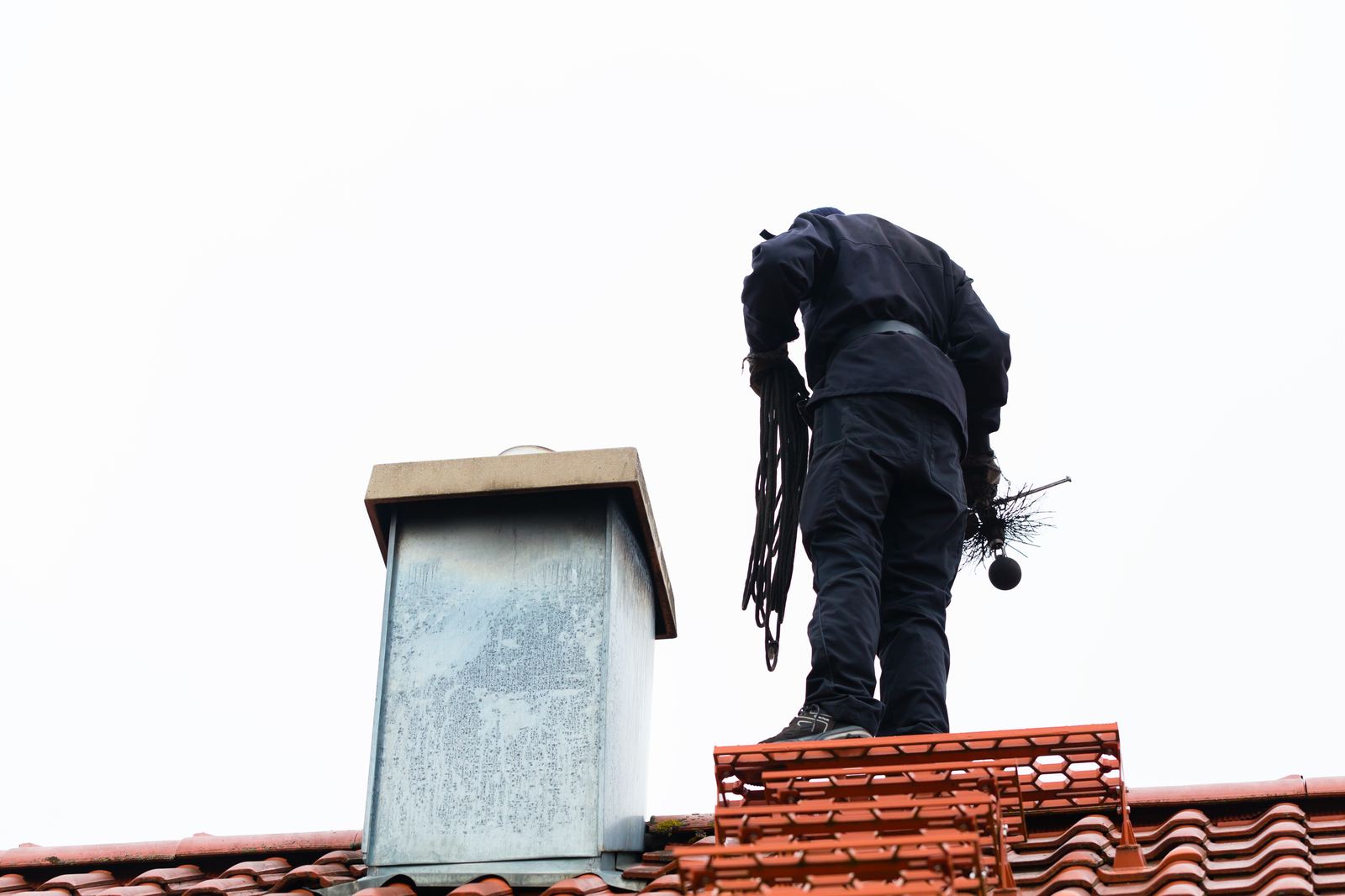
Chimney sweeping clears soot, creosote, and blockages from your flue so smoke exits the way it should. ChimneyBeacon doesn't do the sweeping — we're a free referral service. One call to (888) 650-3035 connects you with an independent, certified chimney sweep near you who does the hands-on work and stands behind it.
A good sweeping starts with protection, not brushes. The sweep lays drop cloths from the door to the hearth, seals off the fireplace opening, and runs a HEPA-filter vacuum the entire time so soot stays out of your living room. Then the cleaning begins: flexible rods fitted with a brush or rotary whip head sized to your flue, worked either from the firebox up or from the roof down. As the head travels the flue, loosened creosote falls onto the smoke shelf and into the firebox, where the vacuum captures it. A thorough job also covers the smoke chamber, smoke shelf, damper, and firebox — the spots a quick once-over tends to skip.
While the equipment is in the chimney, the sweep is also looking. Certified pros pair a sweeping with at least a visual check of the flue liner, and many run a camera up afterward to confirm the walls came clean and the tiles are intact. Expect the visit to take around an hour for a straightforward flue — longer for heavy buildup or a wood stove insert that has to be pulled out first. Before leaving, the pro should walk you through what they found and hand over written documentation: what was cleaned, the condition of the liner and components, and dated photos of anything that deserves attention, so you have a running maintenance record.
A familiar upsell: the sweep finishes cleaning, runs a camera, and suddenly discovers cracked tiles that demand a new liner today. Sometimes the finding is real — flue tiles do crack. But a legitimate pro shows you dated video of your own flue, points to the specific defect, and has no problem with you seeking a second opinion. Pressure to sign on the spot, vague footage, or a dramatic discovery on every single visit are the tells.
Skipping the drop cloths, the seal over the fireplace opening, or the running vacuum turns a routine cleaning into a soot event in your living room — fine airborne soot settles on furniture and carpet and is miserable to remove. Watch the setup: a pro who protects the work area before touching a brush is showing you how the rest of the job will go. If someone starts brushing with the room wide open, stop them.
Flues come in different sizes, shapes, and materials, and brushes must match. A head that's too small polishes the center and leaves buildup on the walls; an aggressive wire brush run through a stainless steel liner can scratch and damage it. Glazed, hardened creosote won't yield to standard brushing at all and needs specialized treatment. Ask what the sweep found on the flue walls afterward — 'all clean' should come with a look, not just a shrug.
These are call-a-professional signs, not panic signs. Stop using the fireplace until it's been looked at, and describe what you're seeing when you call.
Gas burns cleaner than wood, so heavy creosote isn't the issue — but gas flues still need attention. Corrosive combustion byproducts, crumbling tile or mortar debris, and blockages from nests or storm debris all show up in gas flues. NFPA 211's annual inspection standard applies to gas venting systems as well, and a pro can clear whatever the inspection turns up.
Done properly, not messy at all. The standard setup — drop cloths, a sealed fireplace opening, and a HEPA vacuum running throughout — keeps soot contained, and you shouldn't find dust on your furniture afterward. The mess horror stories almost always trace back to skipped containment. It's fair to ask a pro up front how they protect the room, and reasonable to expect a confident, specific answer.
Physically, sometimes — a straight, short flue with light buildup can be brushed by a determined homeowner. What you give up is everything around the brushing: correct brush sizing, cleaning of the smoke chamber and shelf, containment, and a trained set of eyes on the liner. Hardened glaze creosote also won't respond to a standard brush. Many people DIY between professional visits, but shouldn't replace them entirely.
Creosote builds in stages. Early-stage deposits are flaky and brush out easily. With slow, smoldering fires or unseasoned wood, deposits can bake into a shiny, hardened glaze that ordinary brushes just slide over. Glaze is the most stubborn and most combustible form, and removing it takes specialized mechanical tools or chemical treatment across multiple visits. If a sweep identifies glaze, ask to see it on camera and discuss the removal plan.
Yes — call (888) 650-3035 and ChimneyBeacon connects you with an independent certified chimney professional handling chimney sweeping & cleaning in your area. The referral is free; the local pro schedules and prices the work directly with you.
Honest answer: it depends on what a professional actually finds — access, condition, materials, and scope move every quote. Any firm number invented before someone has seen your chimney is marketing, not pricing. The certified pro quotes after looking, in writing, and our referral adds nothing to it.
Sometimes a low quote is a lean, honest operator — and sometimes it's a teaser that grows an 'emergency' once the crew is on your roof. Judge the quote by what it documents, not what it totals: photos, scope, and materials in writing beat a low number with none of the three.
The pros in our network are independent businesses, and the credentials — CSIA certification, insurance, licensing where applicable — are theirs. Ask directly; good pros expect it and answer without flinching. Our CSIA guide explains exactly what the certification covers and why it matters.
One free call connects you with an independent certified chimney professional in your area.
Call (888) 650-3035 — Free Referral