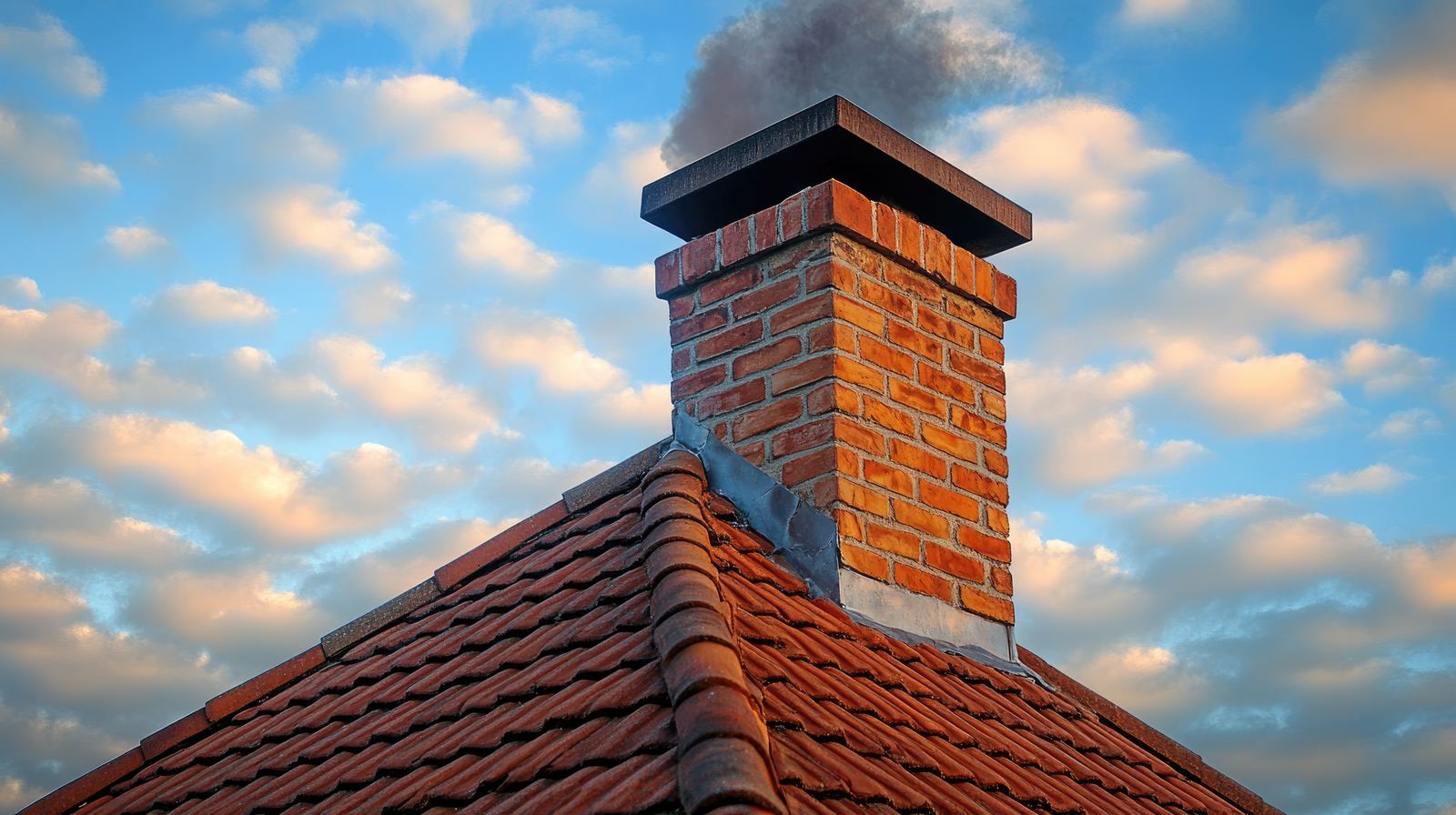
Chimney waterproofing applies a vapor-permeable water repellent to brick and mortar so masonry sheds rain while still releasing trapped moisture. It is a preventive treatment, usually paired with crown and flashing checks. One free call to (888) 650-3035 connects you with a certified independent chimney pro serving your area.
The pro starts by looking at the masonry itself, because waterproofing seals a chimney in whatever condition it is in. Cracked mortar joints, spalled brick faces, and crown gaps get repaired first; sealing over damage locks moisture inside. Once the surface is sound and dry, the pro cleans off dirt, efflorescence, and any old coatings, then masks the roofline and nearby plants. The repellent itself is typically a siloxane- or silane-based product that soaks into the brick rather than forming a film, so the masonry can still breathe. It goes on with a low-pressure sprayer in a flood coat, working from the bottom of the chimney up so runoff saturates the wall evenly.
Most products call for two coats applied wet-on-wet, and the pro will watch the weather; the masonry needs to be dry going in and rain-free for a day or so afterward while the repellent cures. Expect the work to include the whole exposed stack above the roofline, sometimes down to the shoulder if the chimney runs up an exterior wall. Good documentation matters here because the treatment is invisible when done. Ask for the product name and data sheet, before-and-after photos, notes on any masonry repairs made first, and the terms of the applicator or manufacturer warranty, including how long the treatment is expected to last and what would void it.
Water repellent locks in whatever is under it. If it goes on over open mortar joints, hairline crown cracks, or brick that is already saturated, moisture gets trapped inside the wall and freeze-thaw damage can actually accelerate. This is why repointing and crown work come first, and why application on a wet chimney is a corner cut. If the pro quotes waterproofing without walking the masonry first, that step is being skipped.
Masonry has to breathe. Generic clear coats and film-forming sealers block liquid water but also block vapor trying to escape from inside the chimney, and that trapped vapor pops brick faces off in winter. The right materials are vapor-permeable silane or siloxane repellents made for chimneys. Ask what product will be used and request the data sheet; a pro who cannot name the product is a reasonable reason to pause.
Waterproofing is a favorite add-on because it is quick, invisible, and easy to pitch as urgent. Watch for a pro who blames every leak on 'porous brick' and pushes sealant the same day without checking the crown, cap, or flashing, or who insists the treatment must be redone every single year. Quality repellents are typically warrantied for years. A trustworthy answer names the leak source first and treats waterproofing as prevention, not a rescue.
These are call-a-professional signs, not panic signs. Stop using the fireplace until it's been looked at, and describe what you're seeing when you call.
Usually not, and that matters. Repellents slow how much rain the brick absorbs; they do not bridge cracks or seal the crown, flashing, or cap, which is where most active leaks start. The honest sequence is a proper inspection to find the entry point, a repair, and then waterproofing to protect the fix. A pro who reaches for sealant before diagnosis is treating the symptom.
It depends on the product and the chimney's exposure to sun and weather, but chimney-specific silane and siloxane repellents commonly carry manufacturer warranties of around ten years when applied correctly. The pro you are connected with can tell you the exact product, its warranty terms, and a realistic reapplication timeline for your climate. Keep the paperwork; the warranty usually requires proof of proper application.
There is a weather window. The masonry has to be dry going in, the air temperature has to be within the product's application range, and the chimney needs a rain-free stretch afterward to cure. In most of the country that rules out freezing days and the day after a soaking storm. A local pro will schedule around your forecast rather than force the application.
A properly chosen repellent soaks into the brick instead of sitting on top, so there is no gloss, film, or color change once it dries. Some products darken masonry slightly while wet. If appearance matters to you, ask the pro to apply a small test patch on an inconspicuous spot first — a routine request that any experienced applicator will accommodate.
Yes — call (888) 650-3035 and ChimneyBeacon connects you with an independent certified chimney professional handling chimney waterproofing in your area. The referral is free; the local pro schedules and prices the work directly with you.
Honest answer: it depends on what a professional actually finds — access, condition, materials, and scope move every quote. Any firm number invented before someone has seen your chimney is marketing, not pricing. The certified pro quotes after looking, in writing, and our referral adds nothing to it.
Sometimes a low quote is a lean, honest operator — and sometimes it's a teaser that grows an 'emergency' once the crew is on your roof. Judge the quote by what it documents, not what it totals: photos, scope, and materials in writing beat a low number with none of the three.
The pros in our network are independent businesses, and the credentials — CSIA certification, insurance, licensing where applicable — are theirs. Ask directly; good pros expect it and answer without flinching. Our CSIA guide explains exactly what the certification covers and why it matters.
One free call connects you with an independent certified chimney professional in your area.
Call (888) 650-3035 — Free Referral