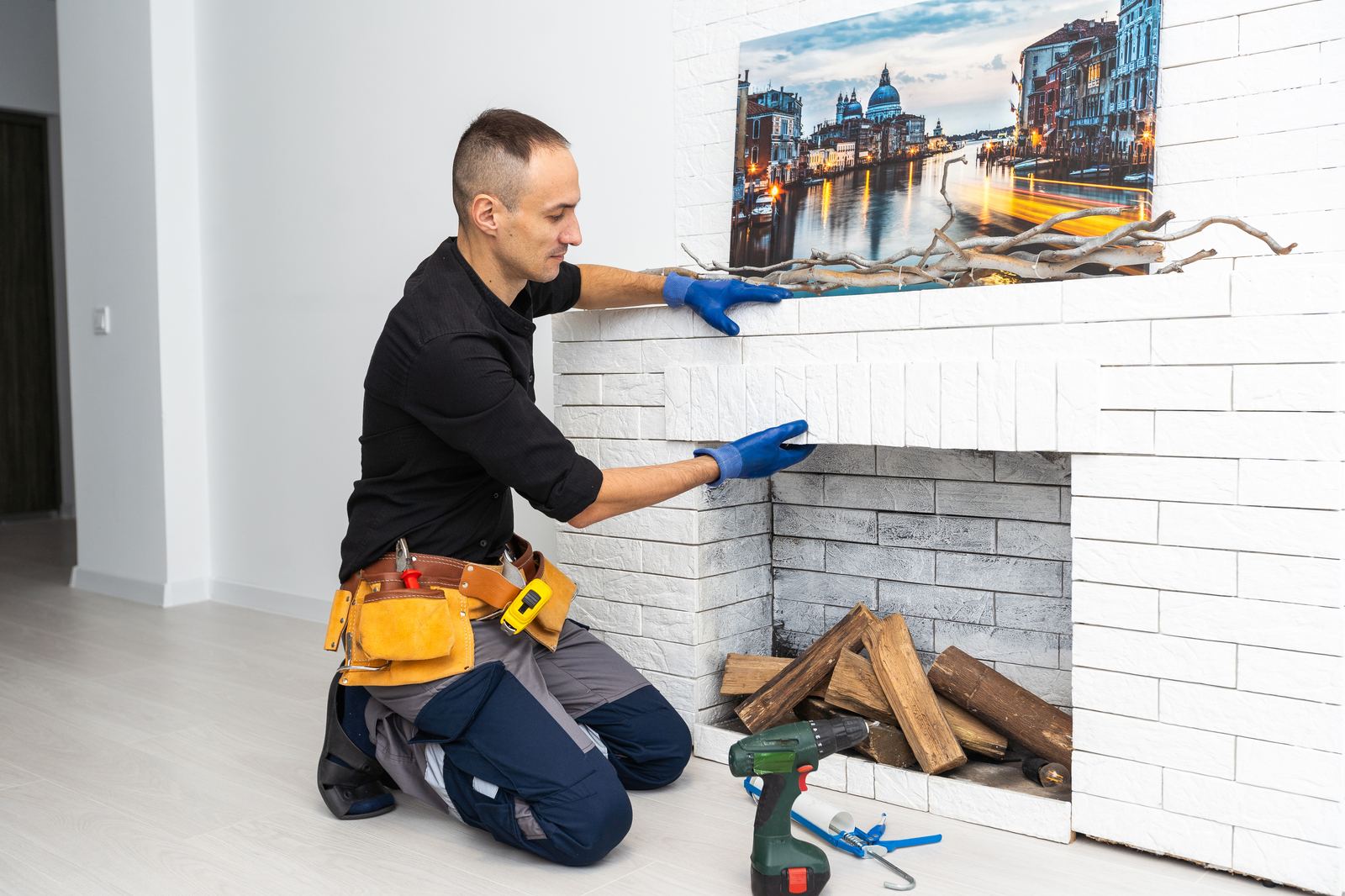
Gas fireplace and chimney service is an annual checkup for equipment that fails quietly: cleaning and testing the burner, pilot, and ignition, inspecting the venting for the corrosion that acidic gas condensate causes, and verifying safe draft. One free call to (888) 650-3035 connects you with a certified local gas hearth professional.
The visit splits between the firebox and the venting. Inside, the technician removes and cleans the glass, checking its gasket for a proper seal on direct-vent units, and repositions the logs exactly per the manufacturer's diagram — misplaced logs cause flame impingement and sooting, which a gas fire should never produce. The burner and pilot assembly are cleaned of dust and spider webs, the thermocouple or thermopile is tested for output, and the ignition system is cycled. The technician also vacuums the firebox, checks the ember material, and confirms the gas connections are tight and the flame pattern looks right: steady, mostly blue at the base, without dark sooty tips.
The venting side is where gas surprises people. Gas exhaust is loaded with water vapor, and when it cools in the flue it condenses into a mildly acidic liquid that corrodes metal liners and eats mortar in older masonry chimneys converted to gas use. The technician inspects the vent or liner for corrosion, white staining, and blockage, checks the termination cap and screen, and verifies the flue is drafting — including a check for spillage at the appliance. On direct-vent fireplaces, the sealed combustion path and outside termination get the same scrutiny. NFPA 211 calls for chimneys and vents to be inspected annually, and gas appliances are not exempt just because they burn clean.
Burning gas produces water vapor, and that moisture condenses on cool flue surfaces as a mildly acidic liquid. In metal liners it shows up as rust and pitting; in masonry chimneys converted from wood to gas, it slowly dissolves mortar joints and flakes tile. The visible clues are subtle — white powdery staining on the chimney exterior, rust at the cap, damp patches near the flue — which is why this failure is usually found during an inspection rather than by the homeowner.
When a gas fireplace lights and then drops out, the usual chain runs through the thermocouple or thermopile — the small sensor that holds the gas valve open. Dust, misalignment, or simple age weakens its output until the valve no longer trusts the flame. It is a routine diagnosis with a meter. The same symptom can also come from a venting problem blowing out the pilot, so a good technician checks both before replacing parts.
Carbon monoxide deserves respect, and that is exactly why it gets misused as a sales tool. Be cautious if a technician declares your fireplace is poisoning your family and demands same-day replacement without showing you instrument readings, photos of the venting, or the specific defect. Legitimate CO concerns come with a measured reading from a combustion analyzer and a clear explanation. If a unit truly is unsafe, turning off the gas is simple — the evidence should still be shown.
These are call-a-professional signs, not panic signs. Stop using the fireplace until it's been looked at, and describe what you're seeing when you call.
Because the damage gas causes is chemical, not sooty. Gas exhaust is heavy with water vapor that condenses in the flue as a mildly acidic liquid, corroding metal liners and deteriorating mortar in masonry chimneys — quietly, over years. Service also verifies the things you cannot see working: draft, the vent path, the glass gasket, and clean combustion. NFPA 211 calls for annual inspection of venting systems regardless of the fuel they serve.
Vented gas logs burn in a real fireplace with the damper open, sending exhaust up the chimney. Direct-vent units are sealed behind glass and draw combustion air from outside while pushing exhaust out through a dedicated pipe. Vent-free units discharge into the room and depend on very precise combustion, which makes their maintenance schedule strict. Each type is serviced differently, so tell the pro which you have when you call.
A properly burning gas fire should produce essentially no soot, so black deposits are a message. The usual causes are logs nudged out of the manufacturer's specified arrangement so flames impinge on them, a disturbed air-to-fuel mixture, or a venting problem. Wiping the glass treats the symptom only. Sooting is a reason to schedule service now rather than wait for the annual visit, because it signals incomplete combustion.
Often, but not automatically. A flue built for wood is typically oversized for a gas appliance, and gas exhaust condensing in that big, cool masonry flue accelerates mortar deterioration. Many conversions call for a properly sized liner, and the damper must be handled per code so it cannot fully close on a vented log set. A pro evaluates the flue's size, condition, and termination before the conversion.
Yes — call (888) 650-3035 and ChimneyBeacon connects you with an independent certified chimney professional handling gas fireplace & venting service in your area. The referral is free; the local pro schedules and prices the work directly with you.
Honest answer: it depends on what a professional actually finds — access, condition, materials, and scope move every quote. Any firm number invented before someone has seen your chimney is marketing, not pricing. The certified pro quotes after looking, in writing, and our referral adds nothing to it.
Sometimes a low quote is a lean, honest operator — and sometimes it's a teaser that grows an 'emergency' once the crew is on your roof. Judge the quote by what it documents, not what it totals: photos, scope, and materials in writing beat a low number with none of the three.
The pros in our network are independent businesses, and the credentials — CSIA certification, insurance, licensing where applicable — are theirs. Ask directly; good pros expect it and answer without flinching. Our CSIA guide explains exactly what the certification covers and why it matters.
One free call connects you with an independent certified chimney professional in your area.
Call (888) 650-3035 — Free Referral